Key Takeaways
- Play-based learning fosters a love for reading and improves literacy skills.
- Incorporating games and creative activities into language arts education enhances engagement and comprehension.
- Parents and educators can utilize various strategies to integrate play into reading instruction.
Table of Contents
- Introduction
- Importance of Play in Literacy Development
- Effective Play-Based Language Arts Activities
- Role of Educational Games in Reading Skills
- Integrating Play-Based Learning at Home
- Benefits of Play-Based Learning
- Conclusion
Engaging children in play-based language arts activities can transform how they learn to read, turning instruction into an interactive and enjoyable experience. By blending playful methods with literacy goals, educators and parents help children develop critical reading skills in ways that feel natural instead of pressured. In particular, accessible options like reading games for kids provide a practical entry point that children look forward to, building both skill and enthusiasm for reading.
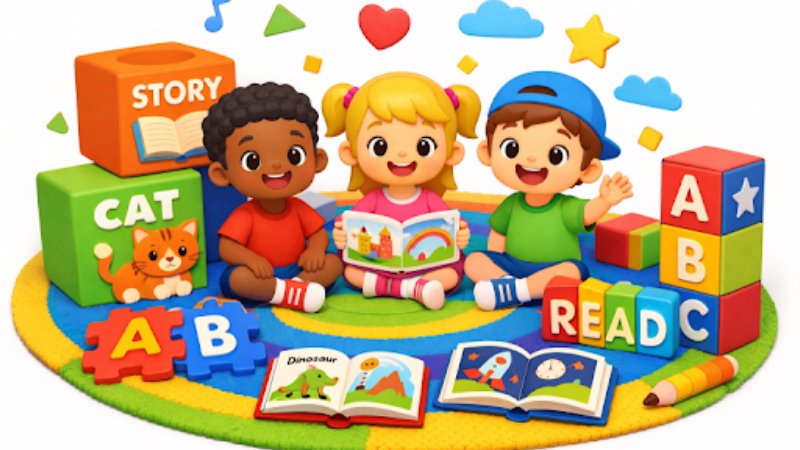
When young learners explore letters, sounds, and stories through games, their engagement deepens, and their confidence grows. As they roll story cubes, match letters in puzzles, or act out beloved tales, they are not only playing—they are building a lasting foundation for literacy. Play-based activities create a nurturing and stimulating environment where language can blossom, and reading feels less like a chore and more like an adventure.
By weaving imaginative, hands-on activities into the process, parents and educators can make language arts come alive. These methods offer practical solutions for busy families and classrooms seeking creative approaches to reading instruction. The result is children who read more eagerly and progress more rapidly, equipped for a lifetime of learning.
Research by the Scholastic Parents highlights that play is crucial for developing language and literacy skills, supporting what parents and educators see every day in young learners.
Importance of Play in Literacy Development
Play holds a vital role in how young children learn and grow in their literacy skills. From preschool through elementary years, playful exploration leads to stronger vocabulary, better comprehension, and greater confidence as readers. According to experts at the National Association for the Education of Young Children (NAEYC), play provides the foundation for cognitive, social, and emotional development, laying the groundwork for more complex reading and writing skills later on.
When play is embedded in literacy activities, children experiment with language by inventing stories, trying out new words, and listening to peers. These exchanges build communication skills and set the stage for future academic success.
Effective Play-Based Language Arts Activities
Creating opportunities for playful learning is easier than it might seem, and the following activities are favorites among teachers and education experts:
- Story Cubes: Rolling dice with images or words sparks imagination and helps children organize their thoughts into stories, boosting narrative and sequencing skills. Children become storytellers, building plots and characters as they work together or alone.
- Alphabet Puzzles: These puzzles encourage matching letters to objects or fitting them into word patterns, providing hands-on practice with letter recognition and phonics. As children manipulate puzzle pieces, they naturally connect symbols to sounds and meanings.
- Role-Playing: Acting out favorite stories, characters, or newly invented scenarios makes comprehension and expressive language come alive. Through pretend play, children delve deeply into character motivations and story structure, cementing understanding in memorable ways.
Families and educators can adapt activities to suit children’s interests or learning levels, ensuring all learners feel included and successful.
Role of Educational Games in Reading Skills
Educational games are essential tools for modern literacy development, offering structured yet enjoyable practice. Games like letter bingo, sight word memory, and interactive digital platforms present literacy concepts in a familiar game format, which children find less intimidating and more inviting. The “Everything Starts with Reading” campaign from LeapFrog, a respected advocate for early learning, illustrates how developmentally appropriate games can boost skills at every stage of literacy growth.
Games encourage repeated exposure to letters, words, and sentences in contexts that make sense and feel relevant. Frequent positive experiences with reading-related games help children develop not just skills, but also positive attitudes toward books and literacy tasks.
Integrating Play-Based Learning at Home
Parents are their children’s first and most important teachers, and everyday routines offer countless chances to weave play-based literacy activities into life at home. The key is to provide a print-rich environment, filled with books, labels, and opportunities for conversation around reading and writing. Designating reading nooks, posting alphabet posters, and keeping a family story basket can transform a home into a literacy-friendly space.
- Encouraging daily storytelling, whether with toys or puppets, strengthens expressive skills and reinforces comprehension.
- Interactive literacy apps promote reading in a digital format, blending fun with foundational lessons in print awareness and decoding.
- Board games designed for literacy development, tailored to children’s ages, invite the whole family to participate in meaningful play.
By modeling a love for reading and applauding effort, parents nurture confidence that will transfer to the classroom and beyond.
Benefits of Play-Based Learning
The impact of play-based approaches extends far beyond immediate reading progress. Key advantages include:
- Higher Engagement: When children are excited about learning, they invest more attention and perseverance. Playful activities increase motivation and make repeated practice something children want to do.
- Improved Comprehension and Retention: Lessons anchored in stories, games, and hands-on activities improve understanding and help kids remember what they learn.
- Critical Thinking and Problem-Solving: Play naturally develops higher-level thinking skills as children navigate game rules, build stories, and solve puzzles.
Ultimately, playful learning cultivates curiosity, experimentation, and a lasting love for books that serve children throughout their lives.
Conclusion
Integrating play into language arts is more than a teaching strategy it is a way to spark excitement, boost confidence, and inspire a lifelong passion for reading. Play-based language arts activities allow children to practice literacy skills at their own pace, connecting joyfully with words and stories. Parents and educators who embrace these approaches help children thrive not only as readers, but as eager learners ready to explore a world of books.