Key Takeaways
- Hybrid cloud solutions combine on-premises infrastructure with public and private cloud services to enhance operational resilience.
- They provide scalability, allowing businesses to adapt to changing demands without significant infrastructure investments.
- Implementing a hybrid cloud strategy can lead to cost savings and improved disaster recovery capabilities.
The speed at which businesses must operate today has made continuous uptime a top priority for companies of all sizes. Maintaining operations despite unexpected disruptions is essential not only to preserve reputation but also to meet customer expectations and regulatory requirements. As digital transformation accelerates, organizations are increasingly turning to hybrid cloud architecture for enterprises to build the agility, resilience, and efficiency required to stay competitive.
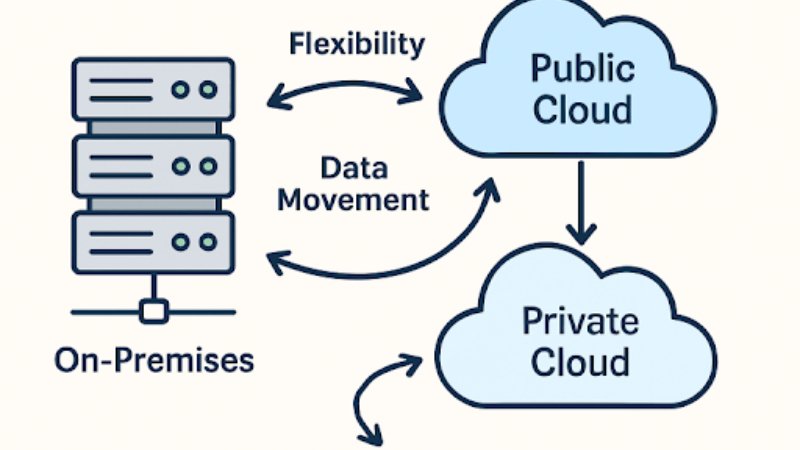
Hybrid cloud solutions offer a unique combination of on-premises, private, and public cloud services, forming a flexible infrastructure that can adapt to diverse business needs. This blended approach can help businesses optimize workloads, enhance disaster recovery, and reduce costs, making it a strategic foundation for long-term success in an uncertain world.
With hybrid cloud strategies gaining traction, IT leaders must navigate the challenges of integration and security while harnessing the benefits of this multi-environment approach. Hybrid cloud is not just a technology decision; it is a strategic move that underpins business continuity and unlocks new opportunities for operational excellence.
Companies adopting hybrid cloud architectures benefit from reduced downtime, seamless scalability, and improved control over their critical data and applications, all while maintaining compliance with industry regulations. Leading analysts at Gartner emphasize that a well-implemented hybrid cloud model positions companies to maintain uninterrupted service amid evolving risks and requirements.
Understanding Hybrid Cloud Solutions
Hybrid cloud solutions are designed to bring together traditional on-premises data centers with private and public cloud resources. This approach creates a single, unified environment for managing applications and data, while still allowing businesses to control sensitive assets locally. For instance, mission-critical applications and sensitive information can be stored on-premises for maximum security, whereas less sensitive workloads or those requiring rapid scalability can be shifted to the cloud.
The underlying architecture of hybrid cloud solutions enables automated workload orchestration. Organizations can dynamically allocate resources to meet business demands, moving data and applications as needed between environments. This flexibility supports both predictable growth and unexpected demand spikes, a critical factor for maintaining business operations during disruptions or peak seasons.
Benefits of Hybrid Cloud for Business Continuity
Enhanced Resilience
A hybrid cloud environment distributes workloads across multiple platforms, thereby significantly reducing the risk of downtime. If one segment of the infrastructure is compromised, workloads can shift seamlessly to another environment, ensuring operational continuity. During disruptive events such as natural disasters, this built-in redundancy enables companies to maintain service levels and avoid extended outages.
Scalability and Flexibility
Hybrid cloud models provide the agility to scale IT resources rapidly, without the need for heavy capital investment in traditional infrastructure. During seasonal spikes, promotional campaigns, or unexpected surges in demand, companies can allocate resources from the public cloud as needed and then scale back down efficiently. This capability is essential for both cost control and performance optimization, allowing businesses to grow without constraints or overspending.
Cost Efficiency
By prioritizing on-premises resources for steady-state and mission-critical workloads, while using the public cloud for flexible, variable workloads, organizations can achieve significant cost savings. The cloud’s pay-as-you-go model reduces unnecessary capital expenditures while enabling quick innovation and market response. Investments are aligned with real business requirements, and overall IT budgets become more predictable.
Implementing a Hybrid Cloud Strategy
Assess Business Needs
Successful hybrid cloud deployment begins with a thorough assessment of business needs and IT priorities. Not all data or applications are suitable for the cloud; organizations must classify information according to security requirements, compliance obligations, and criticality. This approach helps to assign workloads to the optimal environment for performance, security, and compliance.
Choose the Right Providers
Selecting a cloud provider is a decision with long-term implications. Providers should be evaluated based on the services they offer, compliance certifications, support structures, and their approach to security and data privacy. Industry expertise and the availability of advanced features, such as automated failover, should also factor into the decision process.
Develop a Disaster Recovery Plan
At the heart of business continuity is a robust disaster recovery (DR) plan. This plan should go beyond simple data backups and include detailed procedures for failover, rapid recovery, and application restoration in the event of a disruption. Regular testing of DR plans ensures that organizations are prepared for real-world challenges and that the hybrid cloud environment works as expected during a crisis.
Real-World Applications
Global organizations are increasingly adopting hybrid cloud architectures to improve uptime and enhance cyber resilience. ENOC Group, a leading energy company, has implemented advanced data protection within its hybrid environment to reduce recovery times and minimize business disruption. This approach, documented by Zawya, highlights how integrated cloud services are supporting both operational continuity and data security.
Across sectors, hybrid cloud adoption is driving tangible improvements in business agility and resilience. It enables organizations to comply with international regulations, adapt to new digital business models, and deliver consistent customer experiences across all channels, even in turbulent times. For more context, a McKinsey Digital report outlines how hybrid cloud is fueling innovation while supporting mission-critical operations across industries.
Challenges and Considerations
Despite its advantages, hybrid cloud comes with challenges. The integration of multiple platforms can lead to management complexity, while increased endpoints expand the attack surface for potential cyber threats. Thorough monitoring, unified management tools, and robust security protocols are necessary to mitigate these risks. Compliance with data protection regulations remains a top concern and should be addressed early in the planning process to avoid costly missteps.
Final Thoughts
Building resilience through hybrid cloud adoption is increasingly seen as a prerequisite for business continuity in a digital-first world. The ability to combine on-premises infrastructure with the adaptability of cloud services provides organizations with a reliable, cost-effective, and agile IT foundation. With careful planning, regular testing, and a focus on risk mitigation, businesses can unlock operational efficiencies while safeguarding against unplanned interruptions, ensuring ongoing success in the evolving digital landscape.