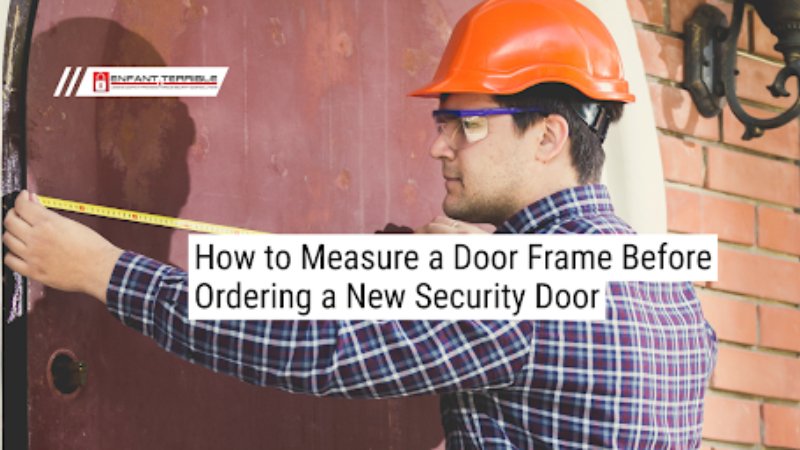
How to Measure a Door Frame Before Ordering a New Security Door
Worried about getting the wrong size security door delivered to your home? You’re in the right place, because this guide shows you exactly how to measure a door frame properly. Getting your measurements wrong means delays, extra costs, and a whole lot of frustration when your new door doesn’t fit.
You might be thinking it’s just a simple measuring job. And here’s the thing, it is simple when you know the right steps. We’ll show you how to measure door width, height, and frame depth so your new security door from Enfant Terrible Shop fits perfectly the first time.
Brisbane homeowners have used these same measuring techniques to avoid returns and installation delays. If you want accurate measurements, read on to learn how to measure door frame openings the right way.
Why Accurate Measurements Are Essential for Security Door Installation
Accurate measurements prevent your security door from fitting issues, gaps, and sealing problems that compromise home safety. Even 5mm off means your new security door won’t fit properly or seal correctly against the frame.

After years of installing security doors across Brisbane, we’ve seen this problem cost homeowners time and money down the track.
Wrong measurements lead to return fees, reordering delays, and sometimes custom fabrication charges that add hundreds of dollars. It’s very obvious because most door frames aren’t perfectly square, so one measurement won’t cut it.
Your security door needs precise sizing to maintain its strength, weather resistance, and locking mechanisms. When the fit isn’t right, you’ll end up with gaps that let in drafts, insects, and reduce your home security. That’s why measuring the first time correctly saves you headaches later.
What You’ll Need: Tools for Measuring Door Frames
The best part about having the right tools is that you’ll get professional-level accuracy without paying for a measuring service. You don’t need fancy equipment (saves a headache later), just a few basics that most homeowners already have at home.
Here’s what you’ll need:
- A steel tape measure at least 3 metres long for accurate door frame measurements
- Notepad and pencil to record all your width, height, and thickness readings
- Torch or phone light for checking dark doorways and hard-to-see edges
- A spirit level to confirm if your frame is plumb, which affects how you take measurements
In the end, if you don’t have a spirit level, you can work with alternatives. For example, if you don’t have a torch, your phone’s flashlight works just as well for checking those dark corners.
How to Measure Door Width the Right Way
Since most door frames aren’t perfectly square, measuring width requires checking three different spots to find the true opening size. Now here’s where it gets tricky. You can’t just measure once and call it done, because your frame might be narrower at the top than the bottom.
Step 1: Find the Narrowest Point of Your Frame
Door frames are rarely perfectly square, so you need to find where the opening is tightest. The tightest areas are usually at the top, where the frame meets the header, or near the middle, where settling can cause the frame to bow inward.
Start by measuring across the frame at the top, then the middle, and finally at the bottom near the threshold. Compare all three to identify the smallest width.
The narrowest measurement is what you’ll use for ordering your security door.
Step 2: Measure at Three Different Heights
Take your first width measurement right at the top of the door frame, measuring from the left jamb to the right jamb. Then, measure across the middle section at roughly waist height. After that, take your third measurement at the bottom near the threshold (even though it feels like overkill).
Write down all three numbers so you can compare and spot any major differences between them.
Step 3: Record the Smallest Width Measurement
Always use the smallest of your three width measurements when ordering your security door. So if your top measures 850mm, the middle is 852mm, and the bottom is 851mm, you’d use 850mm as your door width.
However, if you’re between measurements, round down to the nearest millimetre for a proper fit. Going slightly smaller ensures the door will fit through the tightest part of your frame without forcing or scraping the sides.
Measuring Door Height: Getting It Right
Getting your height measurement spot on means your security door will open and close smoothly for years. Fair warning, though, height is just as important as width when it comes to a proper fit.
Start from the top of the door frame (called the head) and measure straight down to the threshold or floor level. Then, take height measurements on the left side, centre, and right side of the frame for accuracy. Like with width, use the smallest height measurement to avoid ordering a door that’s too tall.
Old homes in Brisbane often have settled frames, so height can vary by 10mm or more (especially in older Queensland homes). The reason you measure on both sides is to check if your frame is level. If your left side measures 2050mm but your right side is 2045mm, that 5mm difference tells you the frame has dropped on one side.
Always record the shortest measurement to ensure your new security door will fit without needing to trim the frame or adjust the threshold.
Door Frame Depth and Reveal Measurements
Most Brisbane homes have frame depths between 90mm and 140mm, but yours might be different. Put simply, these measurements determine what type of hinges and mounting hardware your security door needs.
| Measurement Type | What It Means | Typical Range |
| Frame Depth | Thickness of door jamb (front to back) | 90mm – 140mm |
| Reveal | Visible frame edge where the door sits | Varies by frame |
Frame depth is how thick your door jamb is from front to back, usually ranging from 90mm to 140mm for Aussie homes. The reveal is the visible frame edge where your security door will sit and seal against.
Measure the depth by placing your tape inside the frame and checking the thickness from the inside edge to the outside edge. These door frame measurements tell you if you need standard or custom mounting brackets for installation. That’s because different frame depths require different hinge sizes and screen door mounting systems to ensure everything lines up properly.
Common Measuring Mistakes That Cost You Money
Now that you know how to measure correctly, let’s cover the mistakes that trip people up. This is where most people go wrong, and we’ve found through hands-on work that these errors account for the majority of security door returns.
- Measuring from the wrong starting point: Measuring from skirting boards or architraves instead of the actual door jamb produces incorrect dimensions. Always measure from jamb to jamb on the inside of the frame, not from any decorative trim (this happens more often than you’d think).
- Ignoring uneven floors: Not accounting for uneven floors means your door might not close properly at the bottom. Check your floor level before finalising height measurements, especially in older homes where floors can slope by several millimetres.
- Assuming your frame is square: This assumption can lead to gaps and security vulnerabilities once your new door arrives. Even frames that look straight can be out of square by 5mm to 10mm, which affects how your security screen door fits and seals.
- Forgetting frame depth: Skipping the reveal depth measurement means you might order incompatible hinges or lock systems. Different security door products need specific frame depths to install correctly, so don’t skip this step when buying your new door.
These measuring problems might seem small, but they add up fast when you factor in return shipping, restocking fees, and installation delays. Double-check every measurement to protect yourself from these common sizing mistakes.
Ready to Order? What Happens Next
The final step is the easiest because you’ve already done the hard work. Want to know the best part? Most security door companies will double-check your measurements before they start making your custom door.
Double-check all your measurements one more time before placing your order (seriously, do it twice). Send your dimensions to your supplier with photos of the door frame, if possible. We’ve found through hands-on work that photos help installers spot potential issues before your door goes into production.
Most reputable security door companies will verify measurements before fabrication to prevent expensive mistakes. They’ll contact you straight away if something doesn’t look right with your sizing. That extra attention to detail ensures your new security screen door arrives ready to install without any fit problems or gaps.