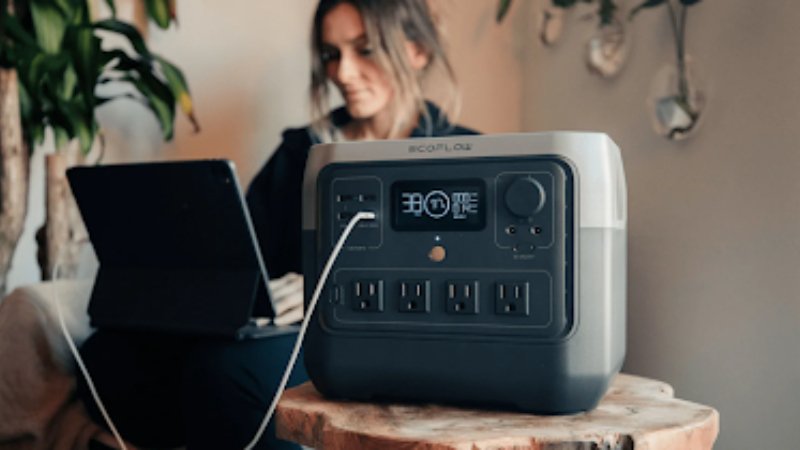
The modern workforce has undergone a radical transformation, shifting away from traditional office environments toward a lifestyle that values mobility and flexibility. For digital nomads and remote professionals, the ability to work from anywhere is the ultimate freedom. However, this freedom is often tethered by a single, critical constraint: the availability of reliable electricity.
Without a consistent power source, the most scenic remote office is just a dead zone waiting to happen. Advances in energy technology have provided a robust solution to this challenge. By harnessing renewable energy through advanced equipment, professionals can now sustain their workflows in off-grid locations without sacrificing productivity or connectivity.
The Evolution of Photovoltaic Technology
Early iterations of solar technology were often bulky, heavy, and notoriously inefficient. They required massive surface areas to generate a meaningful amount of electricity, making them impractical for anyone who needed to move frequently. The trade-off between power generation and portability was a significant barrier for mobile workers.
Today, the landscape of photovoltaic technology has shifted dramatically. Manufacturers have refined silicon cell structures, moving from less efficient polycrystalline designs to advanced monocrystalline structures. These newer cells offer superior electron flow, resulting in higher energy yields from smaller surface areas.
Modern solar panels are designed with these high-efficiency cells, allowing them to capture more sunlight and convert it into usable electricity at a much faster rate. This evolution means that a compact setup can now power laptops, satellite internet receivers, and other critical gear with ease.
Understanding Efficiency and Conversion Rates
When researching energy solutions, the term “efficiency” is frequently mentioned, but its technical implication is often improved. In the context of photovoltaics, efficiency refers to the percentage of sunlight hitting the panel that is successfully converted into electrical energy.
Standard market options often hover around the 15% to 18% efficiency mark. However, top-tier technology has pushed these boundaries significantly. High-performance models now boast conversion rates exceeding 23%, a figure that was considered experimental just a decade ago.
The Physics of Higher Output
This increase in efficiency is achieved through better light-trapping textures and passivation layers on the silicon cells. These features minimize electron recombination, ensuring that more of the generated current reaches your device rather than being lost as heat.
Real-World Implications
For a remote worker, a higher conversion rate means you can generate the same amount of power with a physically smaller panel. This saves valuable space in a vehicle or backpack and ensures faster charging times during limited daylight hours.
Calculating Your Mobile Office Energy Needs
Before investing in any renewable energy hardware, it is crucial to conduct a thorough energy audit of your remote office. Underestimating your power consumption is the most common mistake for beginners transitioning to an off-grid workflow.
You must aggregate the watt-hours (Wh) required by all your devices. This calculation involves multiplying the wattage of each device by the number of hours you intend to use it daily. This baseline determines the size of the array you need.
- High-Performance Laptop: Typically consumes 60W to 100W, requiring roughly 500Wh for a full work day.
- Starlink or Satellite Internet: Averages 50W to 75W of continuous draw, which adds up quickly over an 8-hour shift.
- Cameras and Drones: Intermittent charging needs that can spike demand during midday shoots.
Once you have your total daily requirement, you should aim for a system that can generate that amount within 4 to 5 hours of peak sunlight. This buffer accounts for cloudy days and less-than-ideal sun angles, ensuring your work is never interrupted.
Durability Matters in Outdoor Environments
Technical specifications like voltage and amperage are important, but for a remote worker, physical durability is equally critical. Gear used in field environments faces exposure to dust, moisture, and impact that stationary home systems never encounter.
Reliable photovoltaic modules must be built to withstand these elements. This is where the Ingress Protection (IP) rating becomes a key indicator of quality. A high rating ensures the internal circuits are sealed against environmental hazards.
The Importance of IP68 Ratings
An IP68 rating indicates that the unit is completely dust-tight and can withstand temporary immersion in water. For digital nomads camping near lakes or in dusty deserts, this level of protection is non-negotiable for long-term reliability.
Rigid Versus Portable Form Factors
While rigid panels offer permanence for RV roofs, folding portable solar panels provide flexibility. They can be deployed when needed and stored safely during transit, protecting the glass or polymer surface from road debris and accidental impact.
Optimizing Your Setup for Maximum Output
Owning high-quality hardware is only half the battle; how you deploy it significantly affects the energy harvest. Solar energy systems rely heavily on the angle of incidence, which is the angle at which sunlight strikes the surface of the cells.
To maximize efficiency, the panel should be perpendicular to the sun’s rays. In the northern hemisphere, this means facing true south and adjusting the tilt based on your latitude. Even a slight deviation can reduce output by 10% to 15%.
- Adjust Throughout the Day: Reposition your panels every two hours to track the sun’s movement across the sky for optimal intake.
- Avoid Partial Shading: Even a small shadow from a branch or wire can disproportionately drop the voltage of the entire array due to cell stringing.
- Keep Surfaces Clean: Dust, pollen, and water spots block photons. A quick wipe with a microfiber cloth ensures maximum light penetration.
The Economic and Environmental Impact
Transitioning to a solar-powered workflow is an investment that pays dividends over time. While the initial cost of premium photovoltaic modules may be higher than traditional gas generators, the operational costs are virtually zero. Remote professionals who are based in or returning to areas like Wills Point can get a clearer picture of those long-term savings by comparing wills point electricity rates against the near-zero running costs of a solar-powered setup.
There is no fuel to purchase, no engine maintenance to perform, and no noise pollution to disrupt your concentration. The return on investment becomes evident after a few seasons of travel, as the savings on fuel and campsite hookup fees accumulate. Click for more details.
Furthermore, utilizing solar panels aligns with a sustainable lifestyle. By reducing reliance on fossil fuels, remote workers significantly lower their carbon footprint. This clean energy approach proves that high-tech productivity and environmental stewardship can coexist seamlessly in the modern world.