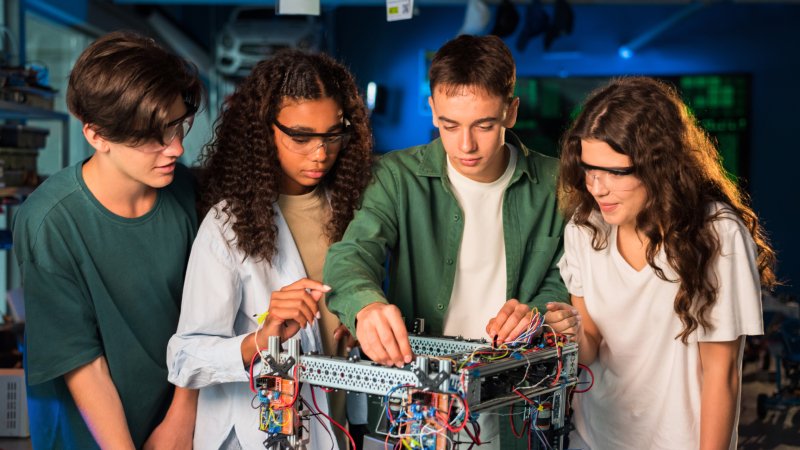
When students step outside the classroom, learning suddenly becomes alive. Educational trips unlock a world where curiosity meets real‑world experience. They bring textbook concepts into vibrant settings where students ask questions, observe, and connect ideas with what they see around them. That’s what makes STEM educational trips so powerful.
In a city like Bangalore, known for its technological pulse and rich cultural scene, planning a STEM educational trip for students in Bangalore means blending fun with meaningful learning. This article will explore how to plan successful STEM trips and highlight the top five educational destinations every teacher and organiser should consider.
Why Are STEM Educational Trips Important?
Did you know why some students light up during a class trip? It’s because learning outside school walls hits a different emotional and cognitive chord. When students encounter real‑life phenomena, concepts they’ve memorised suddenly make sense in engaging and memorable ways.
STEM educational trips are especially impactful. They help students:
- Apply classroom learning to real situations.
- Build practical understanding through observation and experimentation.
- Develop teamwork, problem‑solving, and communication skills.
- Explore future career interests in science, technology, engineering, and maths.
Rather than passively listening to lectures, students become active explorers. That’s the difference between understanding and truly experiencing education.
How to Plan a Successful STEM Educational Trip
Before exploring the top places in Bangalore, let’s tackle how to organise a trip that’s educational and unforgettable. Here are a few tips to consider to plan your trip:
1. Set Clear Learning Goals
Education isn’t just about visiting places. Begin by knowing what you want students to learn:
- Are you focusing on biology and ecosystems?
- Do you want hands‑on technology experiences?
- Is the goal to spark curiosity in engineering or physics?
Having clear goals helps teachers structure discussions and activities before, during, and after the trip.
2. Prepare Students Before the Visit
Introduce the destination’s major themes in class a few days ahead. Share simple facts, short videos, or questions like:
- What do you expect to see here?
- How do you think this place connects to your syllabus?
This builds anticipation and primes their minds to observe purposefully.
3. Engage Students During the Trip
Encourage note‑taking, sketching, and questioning. Ask students:
- What surprised you most?
- How does this relate to what we learnt in class?
- Can you think of one new question based on what you observed?
This cultivates active learning.
4. Reflect and Reinforce After the Trip
A quick class discussion or creative assignment after visiting helps solidify learning. Students can:
- Create posters or presentations.
- Write journal reflections.
- Share fun facts they discovered.
Reflection connects experience with a deeper understanding.
Top 5 STEM Educational Trip Destinations in Bangalore
From underwater ecosystems to fascinating science labs, here are five places in Bangalore that turn learning into adventure.
1. Aquarium Paradise: Dive Into Real Science and Wonder
Suppose you are walking through a glass tunnel while sharks, rays, and colourful fish swim above and beside you. At Aquarium Paradise, students don’t just see aquatic life; they experience it. This immersive destination gives learners a first‑hand look at marine ecosystems like never before.
Aquarium Paradise is one of the most engaging environments for students to connect biology with real living creatures. Instead of reading about ecosystems in a textbook, students get to witness biodiversity in motion. They can observe behaviours, ask questions about habitats, and discuss food chains while surrounded by floating jellyfish, tropical fish, and even sharks.
This venue also makes learning safe and inclusive thanks to its fully indoor setup. Teachers can guide groups through exhibits, pause for discussions near key displays, and link what students see with concepts in their science curriculum.
What makes Aquarium Paradise great for STEM trips?
- Interactive marine biology exposure.
- Visual reinforcement of ecology, adaptation, and biodiversity.
- Engaging exhibits that connect classroom lessons to real life.
- Safe, educational, and weather‑proof venue.
2. Visvesvaraya Industrial & Technological Museum: A Hands‑On Science Haven
If your group loves interactive experiments, then the Visvesvaraya Industrial & Technological Museum should be on your list. This iconic science museum has stood as a centre for exploration and curiosity for decades.
Inside, students encounter exhibits related to physics, electricity, space science, engineering, and more. They can see how machines work, experiment with light and sound, and even watch live science demonstrations.
Here’s what kids can explore:
- Engine Hall & How Things Work Gallery: Understand mechanisms behind machines.
- Fun Science Hall: Play with exhibits demonstrating sound, light, and forces.
- Electro Technic Gallery: Learn core electrical principles through interactive displays.
- Space Technology Gallery: Discover satellites, rockets, and astronomy basics.
- Special Shows: Engage with scheduled science shows that bring topics to life.
These experiences make abstract concepts tangible. When students touch, twist, and explore, science becomes less intimidating and more fascinating.
3. Jawaharlal Nehru Planetarium: Touch the Cosmos
The Jawaharlal Nehru Planetarium offers students an adventurous journey to the cosmos without leaving Earth. This is a perfect stop for astronomy lovers. The planetarium hosts immersive sky shows that simulate stars, constellations, planets, and cosmic events. Students can learn about:
- The solar system and how planets orbit.
- Stars and constellations visible from India.
- Black holes and other fascinating space phenomena.
- Modern space missions and exploration history.
After the show, students often leave with a deep curiosity about space science and a bunch of questions ready for the next class discussion.
Why does this matter for STEM? Because space science blends physics, technology, math, and imagination, all key ingredients of modern science education.
4. Bannerghatta Biological Park: Ecology in Action
Looking for an outdoor learning destination? Bannerghatta Biological Park is an extraordinary spot where biology leaps off the page into living reality.
At Bannerghatta, students can observe wildlife in habitats designed to resemble natural environments. It’s an excellent place to learn about ecology, animal behaviour, conservation, food webs, and biodiversity.
Highlights for learners:
- Wildlife Safari: See lions, tigers, elephants, and bears up close.
- Zoo: Observe a wide variety of animal species and learn classification.
- Butterfly Park: Watch lifecycle stages in real time.
- Nature Trails: Discuss plant and animal ecosystems while walking through lush spaces.
Trips here make concepts like adaptation and ecosystem dynamics tangible. Students can observe how animals interact with their habitat and form a deeper appreciation for conservation science.
5. Lalbagh Botanical Garden: Biology Beneath the Trees
For budding botanists and environmental enthusiasts, Lalbagh Botanical Garden provides a serene outdoor classroom right in the city.
This garden spans acres of plant diversity, showing students how ecosystems flourish through seasonal changes, plant cycles, pollination, and ecological balance.
When visiting, students can learn:
- Plant anatomy and physiology through real specimens.
- How different species adapt to environments.
- Seasonal horticultural patterns.
- Sustainable gardening and environmental stewardship.
Guided tours help students link what they see to broader topics in plant biology and environmental science.
What Questions Should You Ask Students After a Trip?
Reflection is as important as the experience itself. Encourage students to think deeply with questions such as:
- What new thing surprised you the most today?
- Which exhibit helped you understand a class concept better?
- What was one question you have now that you didn’t have before?
- How can you explain what you saw to someone who wasn’t here?
These prompts help students consolidate and articulate their learning.
Tips for Teachers and Organisers
If this is your first time planning a STEM trip, here are some quick tips to make it smooth and enriching:
- Confirm group discounts and booking procedures in advance.
- Arrange transport and meals early.
- Share a simple itinerary with students and parents.
- Assign small buddy groups to help students stay engaged.
- Take plenty of photos and encourage students to document experiences.
With careful planning, your trip becomes a highlight of the academic year.
Conclusion
STEM educational trips turn classrooms into living spaces of wonder. They help learners connect, question, and explore. From the underwater worlds of Aquarium Paradise to the towering trees of Lalbagh Botanical Garden, Bangalore offers a spectrum of places where science comes alive.
The real magic lies not just in visiting these places, but in how students engage with what they see, ask questions, and connect experiences to larger concepts. These journeys build curiosity, confidence, and a deeper understanding of the world around them.
If you’re planning your next STEM field trip, start with these destinations and watch learning come alive with curiosity, engagement, and fun.