Key Takeaways
- Cyberattacks are increasingly targeting businesses, with small and medium-sized enterprises (SMEs) at heightened risk.
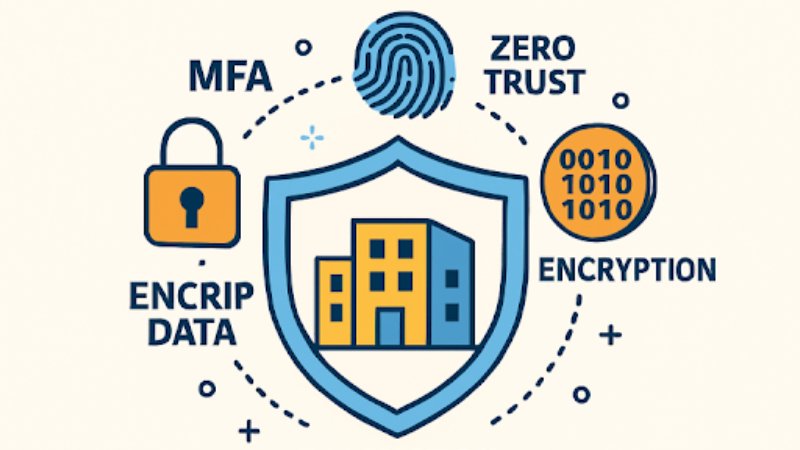
- Adopting multi-factor authentication (MFA) and strong data encryption can effectively block many common threats.
- Zero Trust Architecture (ZTA) offers robust protection in a perimeter-less digital environment.
- Ongoing employee training and predefined incident response are critical to minimizing the impact of cyber incidents.
Understanding the Cyber Threat Landscape
Modern enterprises operate in a dynamic digital landscape where cyber threats have grown in scale and sophistication. Unlike in the past, today’s attackers leverage advanced tactics to bypass conventional security, frequently aiming at businesses’ weakest links—often employees, unprotected endpoints, or unpatched systems. Small and medium-sized enterprises, in particular, are at pronounced risk. Many lack the in-house expertise and budget for comprehensive security. A shocking statistic reveals that nearly one in five SMEs could shutter their operations after a significant cyber incident.
The financial impact is also dire: More than half of SMEs report that a cyberattack loss of $50,000 or less would be catastrophic for their continued operations, and about a third would not survive losses exceeding $10,000. As companies contend with these realities, strengthening their security posture becomes a business imperative—implementing layered protection, such as Versa NGFW, can bolster defenses against evolving attacks.
Beyond direct losses, the fallout from a breach—ranging from regulatory fines and legal costs to customer churn and reputational damage—can far outstrip the immediate impact. Leaders now recognize that proactive strategies must address both external and internal risks for true resilience.
Businesses also face other indirect threats, including supply chain attacks and vulnerabilities introduced by third-party vendors. With the rise of remote and hybrid work, attackers exploit remote endpoints and cloud-hosted resources, making old security perimeters obsolete. Staying ahead requires a blend of next-generation technologies and an unwavering commitment to cybersecurity best practices.
Implementing Multi-Factor Authentication (MFA)
Multi-factor authentication (MFA) is a straightforward yet highly effective method to reduce unauthorized account access. Unlike traditional username and password logins, MFA requires a second, independent form of verification, such as a one-time code or biometric scan. According to Microsoft, accounts protected by MFA are compromised in less than 0.1% of cases—a testament to its power in blocking phishing and credential theft attacks.
For organizations handling sensitive or regulated data, enabling MFA for all users, including customers, vendors, and business partners, strengthens overall security and supports a proactive supplier risk management strategy. Vendor solutions offer various MFA methods, making deployment scalable and user-friendly. As cybercriminals escalate targeting of business accounts, making MFA widespread is essential for thwarting account takeovers.
Encrypting Sensitive Data
Encryption transforms readable data into unreadable ciphertext, ensuring that intercepted information remains protected from prying eyes. There are two primary types: encryption for data at rest (such as files stored on servers or devices) and encryption for data in transit (such as emails or transmissions across networks). A 2023 analysis revealed a 40% reduction in security breaches among companies that employ end-to-end encryption for critical data.
Effective encryption requires proper key management, role-based access controls, and regular audits to ensure security. This strategy should extend beyond obvious targets, such as financial details, to include employee records, intellectual property, and communications. In many industries, such protections aren’t just best practices—they’re legally mandated under frameworks like GDPR and HIPAA. For more on data privacy compliance, see The Wall Street Journal.
Adopting Zero Trust Architecture (ZTA)
The Zero Trust model abandons the assumption that internal networks are inherently secure. Instead, it mandates continuous verification of every user, device, and service requesting access. This approach closes gaps that cybercriminals exploit—especially in environments with remote work, mobile devices, and distributed applications.
Zero Trust principles include micro-segmentation, least-privilege access, identity monitoring, and real-time analytics. By strictly limiting permissions and rigorously authenticating identities, ZTA reduces an attacker’s ability to move laterally within breached networks. Major organizations, ranging from banking to healthcare, are increasingly implementing Zero Trust to counter emerging threats proactively. Zero Trust, reference TechRepublic.
Regular Employee Training
Human error remains a leading cause of data breaches, with phishing attacks and social engineering accounting for a significant portion of credential theft and ransomware incidents. Organizations can significantly reduce risk by implementing regular, interactive employee training programs that educate staff on recognizing suspicious emails, creating and managing strong passwords, and following proper escalation procedures when potential threats arise. Incorporating simulated phishing exercises and requiring reporting of security lapses reinforces vigilance and builds practical experience. Equally important is leadership engagement: when management models a strong commitment to cybersecurity and frames it as a shared responsibility, employees are more likely to stay alert, adhere to best practices, and avoid preventable errors that could compromise organizational data.
Developing an Incident Response Plan
No prevention strategy is foolproof. Having a comprehensive incident response plan ensures rapid, organized action when the worst happens. This playbook should define workflows for detecting, containing, eradicating, and recovering from cyber events, with clear assignments of roles and escalation paths.
Regular drills, post-incident evaluations, and collaboration with legal, communications, and technical teams enable continuous improvement. A fast, transparent response not only minimizes disruption but also helps maintain customer trust and fulfill regulatory obligations.
Conclusion
Cybersecurity today extends far beyond the IT department—it is a responsibility shared across every level of an organization. Companies that take a proactive approach begin by thoroughly understanding their unique threat landscape and implementing layered security measures, including multi-factor authentication, encryption, and continuous monitoring. Adopting a Zero Trust model ensures that access is continuously verified, while fostering a culture of employee awareness helps prevent human error, one of the most common attack vectors. Integrating these practices strengthens the organization’s ability to detect, respond to, and recover from cyber incidents. Ultimately, such a comprehensive strategy not only safeguards critical data and systems but also builds trust, operational resilience, and sustainable growth in the rapidly evolving digital landscape.